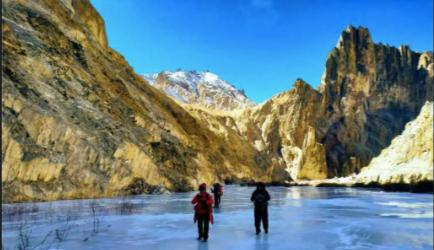
Here is a structured, engaging blog post outline and a full sample draft tailored for a high-altitude adventure travel brand. It balances the stark, raw beauty of the region with practical insights for trekkers.
Blog Post Title: Frozen Zanskar: Walking the Spine of the Winter Himalaya
1. Catchy Introduction
The Hook: Imagine walking on a glass-like sheet of ice, just inches thick, while a wild, turquoise river flows violently right beneath your boots.
The Setting: When winter locks Ladakh away from the rest of the world, temperatures plummet to $-30^\circ\text{C}$, and the fierce Zanskar River transforms into a highway of ice.
The Essence: This isn't just a trek; it’s an expedition into one of the most isolated, breathtakingly beautiful inhabited valleys on Earth.
2. Why Zanskar in Winter is Unlike Anything Else
The Mythic Chadar: Introduce the concept of the "Chadar" (the frozen blanket). For centuries, this icy corridor was the only winter lifeline for the locals to trade and access healthcare.
The Visual Contrast: Deep canyon walls of yellow ochre and dark granite rising vertically for hundreds of feet, framing a narrow ribbon of pristine white ice and freezing blue water.
The Sounds: The eerie, living sounds of the river—the deep "booms" of shifting ice sheets and the crisp crunch under crampons.
3. The Reality of the Trail: What It Takes
Extreme Temperatures: Day temperatures hover around $-10^\circ\text{C}$, while nights can easily drop to $-30^\circ\text{C}$. Keeping your water from freezing solid is a sport in itself.
The "Chadar Shuffle": A unique way of walking—sliding your feet gently without lifting them too high—to navigate smooth, friction-free ice.
Living Camps: Sleeping in high-altitude tents on rocky river banks or inside ancient caves (called baas) used by local porters for generations.
4. Cultural Resilience: The Heart of Zanskar
The Local Porters: The true heroes of the region. Share how their warmth, laughter, and incredible stamina turn a grueling expedition into a deeply human experience.
Monasteries on Cliffs: Mention iconic, snow-dusted monasteries like Karsha or Phugtal that look like they were carved directly out of the mountain face.
5. Quick Preparation Checklist
To give readers immediate value, include a scannable breakdown of essentials:
Layer / Gear: What to Pack. Why It Matters: Footwear, Waterproof trekking boots + high-quality Gumboots. Gumboots are essential for wading through slushy ice water. Clothing: 4- 5 layers (Merino wool thermals, heavy down jacket, windproof shell). Layering allows you to adjust as you heat up from walking.Sleeping$-20^\circ\text{C}$ rated sleeping bag + fleece liner. The ground steals your warmth; insulation from the ice is key. Electronics: extra batteries, power banks wrapped in wool. Extreme cold drains lithium-ion batteries in minutes.
6. Conclusion & Call to Action
The Takeaway: The frozen wilderness of Zanskar changes a person. It strips away the noise of modern life and replaces it with raw survival and unparalleled peace.
CTA: Are you ready to test your limits on the ice? Check out our upcoming winter departure dates and technical itinerary for the ultimate Himalayan crossover.