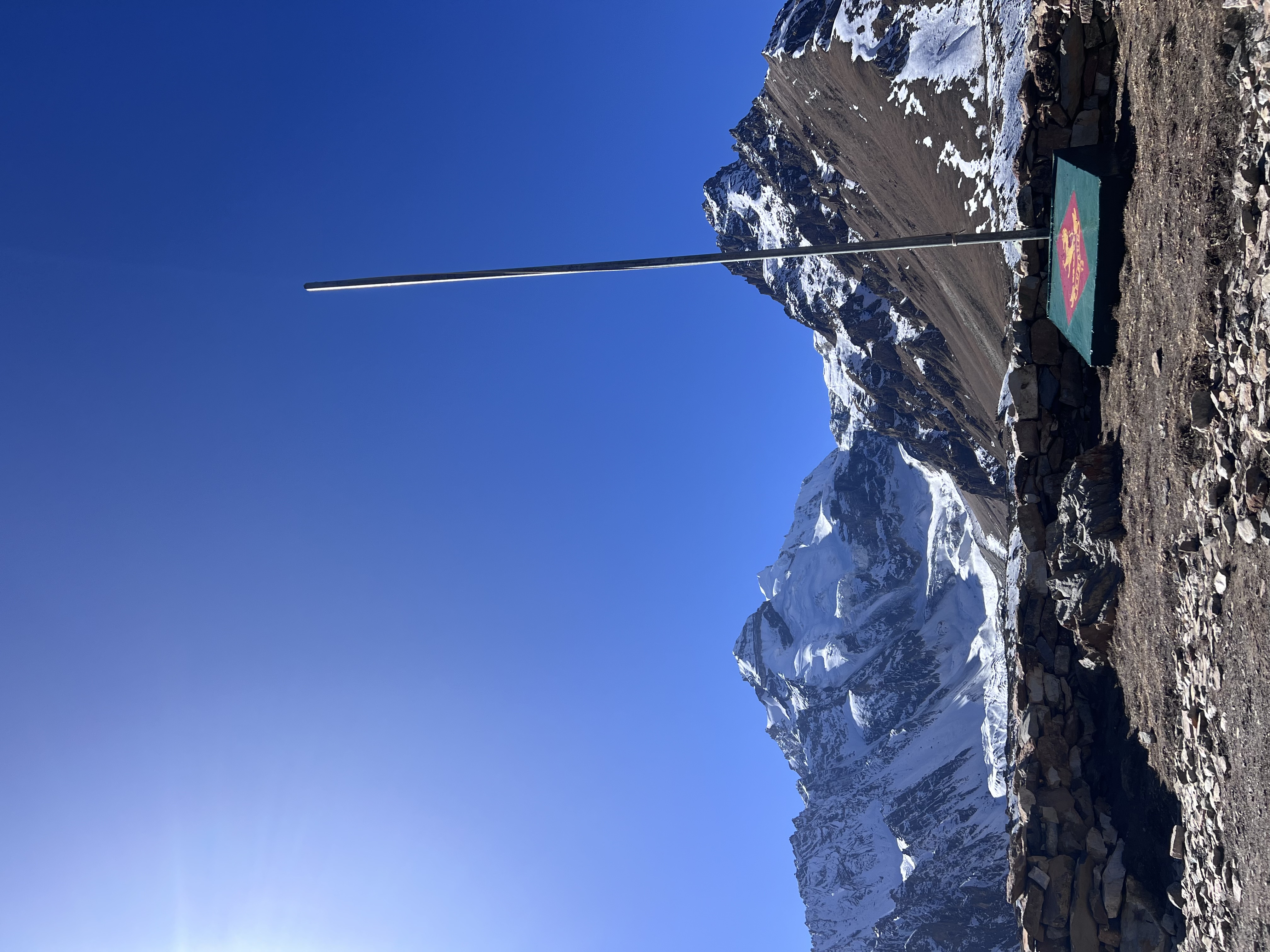
The Dhauladhar’s Ultimate Proving Ground
For those who find standard trekking trails a bit too predictable, the Dhauladhar Range offers a true masterclass in high-altitude endurance: Hanuman Tibba. Standing at an imposing 5,982 meters (19,626 ft), it isn’t just a mountain; it’s a gateway to technical mountaineering that separates the casual hiker from the committed climber.
Beyond the Typical Trek
If you have spent your weekends gazing at the sharp, snow-dusted silhouette of Hanuman Tibba from the Kullu Valley, you already know it commands respect. It doesn’t just rise; it pierces the sky. As a massive pyramid of ice and rock bridging the landscape to the Pir Panjal, it demands a specific, non-negotiable skillset.
The Ascent: What to Expect
This is not a leisure walk. It is a calculated, multi-day endeavor.
The Approach: You’ll start in the familiar territory of Solang, trekking toward the glacial amphitheater of Beas Kund.
The Technical Crux: At the Tentu Pass, the "real" work begins. Expect to navigate steep gradients that require fixed ropes, ice axes, and a steady, rhythmic use of crampons.
The Summit Push: The final stage is a war of attrition against thin air. It is physically taxing, but the panoramic view of the Dhauladhar and Pir Panjal ranges makes every gasping breath feel like a victory.
Quick Reference: The Mountaineer’s Sheet
Elevation: Reaching 5,982 meters (19,626 ft) requires significant high-altitude acclimatization.
Primary Challenge: Success depends on your ability to navigate technical rock and ice terrain.
Recommended Window: Plan your expedition for early summer (June) or late summer (September) to maximize weather stability.
Expedition Length: Budget for 10 to 12 days to ensure you have enough time for proper acclimatization and a safe summit window.
Key Requirement: A valid Indian Mountaineering Foundation (IMF) permit is mandatory, alongside prior technical training.
The Reality of the Climb
Don't be fooled by the photos—this is not a peak for the inexperienced. If you are planning this, shift your training from "long walks" to strength and technical discipline.
Conditioning: You are looking at weeks of rigorous cardiovascular training. Your lungs need to be as prepared as your quads.
Gear Mastery: You must be comfortable with a harness, carabiners, and the physics of ice climbing. If you haven't taken a formal mountaineering course, that should be your first objective.
The Mountain Rules: The Himalayas don't negotiate. Weather patterns can shut down a route in hours. Always prioritize the descent, and never push for the summit if your window of safety closes.
Final Advice For the Summit
Hanuman Tibba is a test of patience as much as it is a test of strength. It rewards those who are humble enough to respect the mountain’s temperament. If you treat it like an adversary to be conquered, it will likely beat you. If you treat it like a challenge to be navigated with caution and skill, you might just find yourself standing on top of the world.
Excerpt:Hanuman Tibba is a test of patience as much as it is a test of strength. It rewards those who are humble enough to respect the mountain’s temperament. If you treat it like an adversary to be conquered, it will likely beat you. If you treat it like a challenge to be navigated with caution and skill, you might just find yourself standing on top of the world.