Walking on Water: A Brutally Honest Survival Guide to Ladakh’s Chadar Trek
For centuries, the indigenous people of Zanskar have used a frozen river highway to stay connected to Leh when heavy snowfall cuts off the mountain passes. Today, it’s known globally as the Chadar Trek—widely considered one of the wildest, most beautiful, and unforgiving endurance treks on Earth.
If you’ve ever fantasised about walking across a shifting sheet of glass while the thermometer drops to a bone-chilling 30°C, here is exactly what it takes to survive the "Ice Age" dream.
The Stats: What You’re Up Against
Before packing your bags, you need to understand that Chadar isn't a standard mountain trek. There are no steep ridges to summit; instead, it is a test of sheer physical and mental resilience.
FeatureDetailsLocation Zanskar River, Ladakh, IndiaAltitude~3,170 meters (10,400 ft) to 3,400 meters (11,150 ft)Distance~105 km (To-and-fro from Tilat Sumdo to Nerak)Best TimeJanuary to February (When the river completely freezes)TemperatureDay: -10°C to -15°C | Night: -25°C to -35°C
The Reality of the Trail: It’s Alive
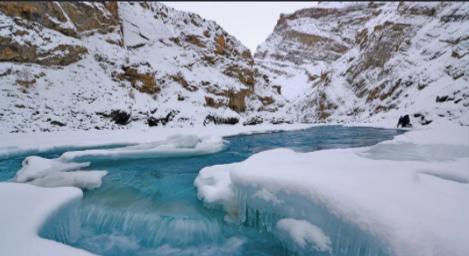
The word Chadar translates to "blanket," referencing the stark white sheet of ice covering the river. But don't expect a smooth ice rink. The Chadar is a living, breathing entity that changes by the hour.
The Penguin Walk: Normal hiking strides will instantly send you flying onto your back. Trekkers have to adopt a low-gravity, sliding "penguin shuffle" to maintain friction on the glossy, glass-like ice.
The Breaking Ice: The river flows furiously beneath the ice sheet. You will constantly hear deep, echoing cracks beneath your feet. In sections where the Chadar has melted or broken entirely, you’ll either have to wade through freezing, calf-deep water in rubber gumboots or scramble up vertical, ice-slicked rock faces to bypass the river.
The Cold is a Character: Everything freezes. Your water bottle will turn to solid ice within an hour if not insulated. Your camera batteries will drain to zero in minutes if not tucked into your inner jacket pockets next to your body heat. Even contact lens solution turns to slush overnight.
The Golden Reward: Nerak Waterfall
The ultimate turnaround point of the trek is the spectacular Nerak Waterfall. Standing before a massive, 50-foot wave of water frozen completely solid in mid-air is a humbling, otherworldly sight. The gorge narrows here, casting dramatic shadows while the midday sun reflects off the deep turquoise pools of open water nearby.
5 Golden Rules for Surviving the Ice
1. Master the Art of Layering
Do not bring heavy, bulky woollens. The key is lightweight, technical layers. You will want a moisture-wicking base layer, two layers of fleece, a heavy down jacket for camp, and a windproof/waterproof outer shell.
2. Gumboots Over Trekking Boots
While high-end trekking boots are great for the snow, local Ladakhi gumboots are the undisputed kings of the Chadar. They provide surprising traction on hard ice and keep your feet dry when stepping into slush or shallow river water.
3. Acclimatization is Non-Negotiable
Flying directly into Leh (over 11,000 feet) in the dead of winter is a shock to the system. You must spend at least 3 days resting in Leh to allow your body to adapt to the thin oxygen levels. Acute Mountain Sickness (AMS) on the Chadar is incredibly dangerous because emergency evacuation from the deep gorge is extremely difficult.
4. Protect Your Gear
Batteries: Keep them inside your sleeping bag at night and in your chest pocket during the day.
Photography: Carry a pair of thin, inner gloves. Taking off thick mittens to snap a photo at -25°C will numb your fingers to the bone in a matter of seconds.
5. It’s 90% a Mental Game
Your body will want to quit when you wake up at 6:00 AM inside a tent that feels like a freezer. Your hands will ache, and your muscles will be sore from sliding. The people who finish the Chadar aren't necessarily the fittest athletes—they are the ones with the mental grit to take life one sliding step at a time.
The Verdict: The Chadar Trek will push you out of your comfort zone, strip away your vanities, and force you to disconnect entirely from the digital world. In return, it offers a stark, pristine Himalayan silence and a profound sense of peace that you simply cannot find anywhere else on the planet.
Are you planning to undertake this trek yourself, or are you pulling together research to write your own adventure blog?