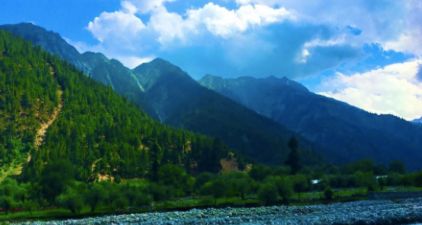
The Kalash Valley (often associated with the "Kalash Mountains" in the Hindu Kush range of Pakistan) is one of the most culturally significant and geographically isolated regions in the world. While it doesn't have a single "Mount Kalash" in the way Tibet has Mount Kailash, the entire landscape is considered sacred by the Kalash people.
Here is a breakdown of why this region is frequently "considered" by explorers, anthropologists, and travellers:
1. Cultural Uniqueness
The Kalash people are a linguistic and religious minority who practice a form of ancient animism. There is a long-standing (though genetically debated) legend that they are descendants of Alexander the Great’s lost legions. Their festivals, like Chilam Joshi, draw visitors from around the globe who are interested in indigenous traditions that have remained unchanged for centuries.
2. Mountaineering and Trekking
While the nearby Karakoram range gets more "peak-bagging" attention, the Hindu Kush offers rugged, less-crowded alternatives.
* Tirich Mir: At 7,708 meters, it is the highest peak in the Hindu Kush and looms over the region.
* Lowari Pass: Historically the only way to reach the valley by land, it was a rite of passage for adventurers before the tunnel was completed.
3. Geographical Confusion with Mount Kailash
It is common for people to confuse the "Kalash" region with Mount Kailash in Tibet.
* Mount Kailash is the "holy mountain" considered the center of the universe in Hinduism, Buddhism, and Jainism.
* The Kalash Mountains refer to the ridges surrounding the Bumburet, Rumbur, and Birir valleys in Northern Pakistan.
---
Comparison at a Glance
| Feature | Kalash Valley (Pakistan) | Mount Kailash (Tibet) |
| :--- | :--- | :--- |
| Primary Draw | Indigenous culture & festivals | Religious pilgrimage (Kora) |
| Mountain Range | Hindu Kush | Himalayas / Transhimalaya |
| Accessibility | Jeep tracks via Chitral | High-altitude plateau trekking |
| Status | Inhabited cultural hub | Unclimbed sacred peak |
Are you looking for a challenge?
If you are considering it for a technical expedition, the terrain is notoriously "crumbly" compared to the solid granite of the Alps or the Karakoram. However, for high-altitude trekking and cultural photography, it is widely considered a "bucket list" destination.
Are you asking from the perspective of planning a trek, or were you thinking of the spiritual pilgrimage to the peak in Tibet?
>No, Mount Kailash is not in India. It is located in the Ngari Prefecture of the Tibet Autonomous Region of China. While it is a deeply sacred site in Hinduism, Buddhism, and Jainism, located near the Indian border in the Himalayas, it is under Chinese administrative rule.