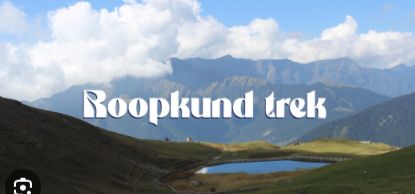
The Mystery of Skeleton Lake: A 2026 Guide to the Roopkund Trek
Hidden deep within the Garhwal Himalayas of Uttarakhand lies a body of water that has baffled scientists, historians, and explorers for decades. Roopkund Lake, sitting at a staggering altitude of 15,750 ft, is famously known as the "Skeleton Lake." When the summer sun melts the ice, hundreds of human remains become visible beneath the crystal-clear water—a macabre yet mesmerizing sight that makes this one of India's most legendary treks.
Whether you are an adrenaline junkie or a history buff, the trek to Roopkund offers a rare blend of breathtaking natural beauty and an ancient, unsolved mystery.
Why Roopkund is a "Must-Trek" Destination
The Mystery: Carbon dating suggests the skeletons date back to the 9th century. Local folklore speaks of a royal pilgrimage struck by the wrath of the goddess Nanda Devi, while scientists point toward a freak, lethal hailstorm.
The Twin Meadows: You will walk through Ali Bugyal and Bedni Bugyal, two of Asia’s largest high-altitude meadows. These rolling carpets of velvet green offer a 360-degree view of the majestic Mt. Trishul and Nanda Ghunti.
Dramatic Transitions: The trail shifts rapidly from dense oak and rhododendron forests to sprawling grasslands, finally ending in a stark, lunar-like landscape of rock and snow.
>Region:Chamoli District, Uttarakhand
>Max Altitude:15,750 ft ($4,800$ m)
>Difficulty:Moderate to Difficult
>Best Time:May–June (Snow) or September–October (Clear Views)
>Duration:8 Days
>Base Camp:Lohajung
Trek Essentials at a GlanceThe 2026 Status Update: Responsible Trekking
As of 2026, it is important to note that the Uttarakhand High Court has placed strict regulations on overnight camping in the Bugyals (meadows) to protect the fragile alpine ecosystem. While the route remains a crown jewel of Indian trekking, it is now strictly regulated. Most trekkers use authorized local operators who manage permits and follow eco-sensitive itineraries to ensure the "Skeleton Lake" remains preserved for generations to come.
A Snapshot Itinerary
Lohajung to Didna Village: A steady descent to the Neel Ganga river followed by a climb through thick forests.
Didna to Ali Bugyal: A steep ascent that rewards you with an endless expanse of neon-green meadows.
Ali Bugyal to Patar Nachauni: A ridge walk with the Trishul massif towering over you.
Patar Nachauni to Bhagwabasa: The air gets thin as you reach the high-altitude stone huts of Bhagwabasa.
The Summit Push: A 3:00 AM start to reach Roopkund Lake. Witness the skeletons at sunrise before descending back to lower altitudes.
Pro-Tips for the Trail
Physical Prep: You should be able to run 5 km in 30–35 minutes. The thin air at 15,000 ft is no joke; cardio is your best friend.
Layer Up: Temperatures at Bhagwabasa can drop to -5°C even in summer. Follow the three-layer rule: moisture-wicking base, insulating fleece, and a windproof outer shell.
Hydrate: Drink at least 4 liters of water daily to help your body acclimatize and prevent Acute Mountain Sickness (AMS).
The Roopkund Trek isn't just about reaching a destination; it’s about testing your limits against the backdrop of the Himalayas. Are you ready to uncover the mystery?