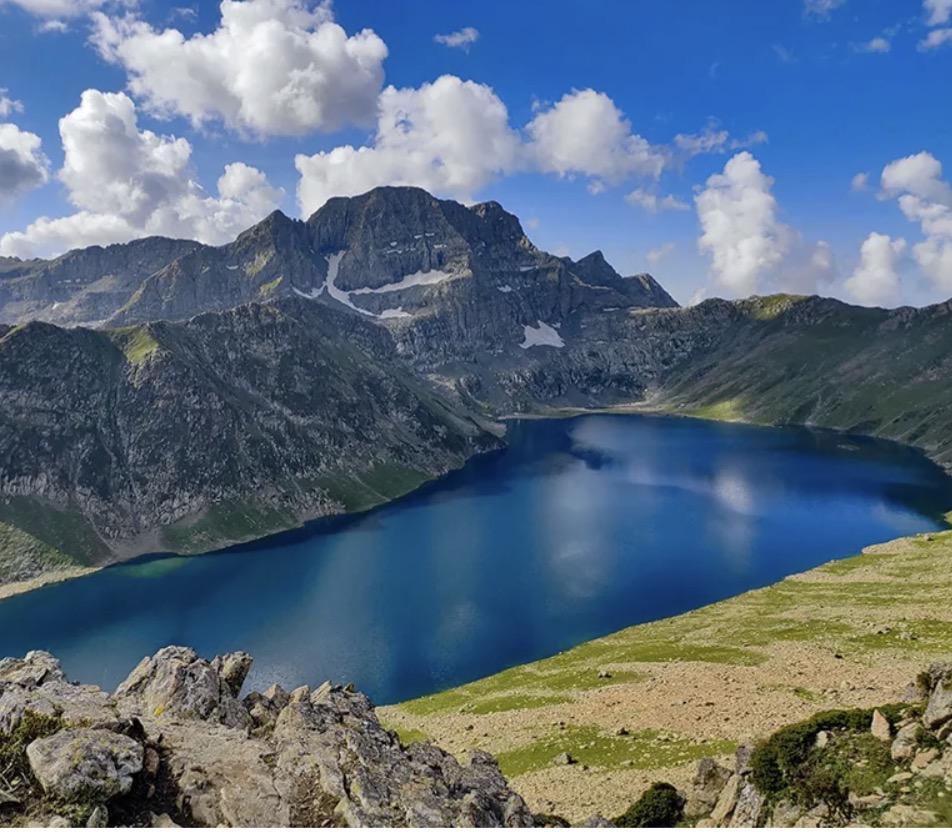
If you have ever wanted to step directly into a landscape painting, the Tarsar Marsar trek in Jammu & Kashmir is your ticket there.
While the famous Kashmir Great Lakes (KGL) trek gets a lot of the spotlight, Tarsar Marsar is quietly considered by seasoned Himalayan hikers to be the most visually perfect trek in India. It doesn’t just show you alpine lakes from a distance; it invites you to pitch your tent right on their grassy shores, watching the water change color from turquoise to deep ink as the sun sets behind jagged limestone ridges.
Here is the ultimate guide to experiencing this Kashmiri paradise, written for adventurers ready to lace up their boots.
The Quick Snapshot
Total Distance: ~48 km (29.8 miles)
Highest Altitude: 4,115 meters (13,500 feet) at the Tarsar Pass
Duration: 7 Days (including travel days to and from Srinagar)
Difficulty: Moderate (Perfect for fit beginners and experienced hikers alike)
Best Time to Visit: July to September
Why Tarsar Marsar is So Special
Unlike other high-altitude treks where lakes sit at the bottom of steep, inaccessible rocky bowls, Tarsar Marsar is incredibly intimate.
The trek features two massive, almond-shaped oligotrophic lakes—Tarsar and Marsar—separated by a dramatic mountain pass. The trail is carpeted with a velvet-green sheet of meadows (margs) where local Bakarwal shepherds graze their flocks, rivers cascade right beside the path, and clusters of wild blue poppies bloom hidden among the rocks.
The Day-by-Day Itinerary
Day 1: Srinagar to Aru Valley
Drive Distance: 112 km (approx. 4 hours)
Altitude: 2,420 m (7,940 ft)
The journey begins with a scenic drive from Srinagar along the roaring Lidder River, passing through the tourist hub of Pahalgam. The road eventually ends at Aru Valley, a picture-postcard village with wooden Kashmiri houses, rolling green slopes, and dense pine forests. You will spend the night in a local homestay or a campsite, breathing in the crisp mountain air.
Day 2: Aru Valley to Lidderwat
Trek Distance: 10 km (approx. 6 hours)
Altitude Gain: 2,420 m to 2,780 m (9,120 ft)
Your first day of walking is a gentle, enchanting introduction to Kashmir. You will trail along the bubbling Lidder River, passing through dense canopies of pine and fir trees. The forest eventually opens up into Lidderwat, a massive, flat meadow split by a clear mountain stream. Pitching tents here feels like camping in a luxury alpine resort, minus the concrete.
Day 3: Lidderwat to Shekwas
Trek Distance: 5.6 km (approx. 5 hours)
Altitude Gain: 2,780 m to 3,365 m (11,040 ft)
As you leave Lidderwat, the treeline begins to recede, giving way to vast, sweeping valleys. The trail climbs steadily, taking you past clusters of silver birch trees and small mud-and-stone huts belonging to the nomadic Gujjar community. You will camp at Shekwas, a wide, grassy clearing surrounded by towering ridges.
Day 4: Shekwas to Tarsar Lake (The Big Reveal)
Trek Distance: 5 km (approx. 4 hours)
Altitude Gain: 3,365 m to 3,790 m (12,430 ft)
This is the day you’ve been waiting for. The climb from Shekwas to Tarsar is a steady ascent over grassy hills. Suddenly, the trail levels out, and the massive, glittering expanse of Tarsar Lake appears before your eyes. The water is so clear that it reflects the surrounding jagged peaks like a mirror. The best part? Your campsite is right on the edge of the lake.
Day 5: Tarsar to Sundersar via Tarsar Pass
Trek Distance: 5 km (approx. 5 hours)
Altitude Gain/Loss: 3,790 m to 3,945 m (12,940 ft) via 4,115 m Pass
You will start early to tackle the steepest part of the trek: the climb to Tarsar Pass. As you reach the ridge at 13,500 feet, look back to see Tarsar Lake in its entirety. Look forward, and you will see the valley leading to the next lake. Descending from the pass, you will walk into Sundersar, a smaller, incredibly pristine lake surrounded by wildflowers.
Day 6: Sundersar to Marsar Lake and down to Homwas
Trek Distance: 9 km (approx. 7 hours)
Altitude Loss: 3,945 m to 3,505 m (11,500 ft)
From Sundersar, a short, rocky climb brings you to a high ridge overlooking Marsar Lake. Marsar is shrouded in mystery; it is often locked in by heavy mist and clouds, creating a dramatic, ethereal atmosphere. After spending time absorbing the views from the overhang, you will turn back and begin a long, beautiful descent down to the valley of Homwas for your final night under the stars.
Day 7: Homwas back to Aru Valley & Drive to Srinagar
Trek Distance: 13 km | Drive: 112 km
Altitude Loss: 3,505 m down to 2,420 m
The final day is a swift retracing of your steps back through Lidderwat and into Aru Valley. Your knees will feel the descent, but the sight of the pine forests welcoming you back makes it a joyous walk. From Aru, a vehicle will pick you up and drive you back to Srinagar, arriving just in time for a hot shower and a celebratory Kashmiri Wazwan dinner.
The Golden Window: When to Go
Tarsar Marsar is entirely dependent on the summer season.
July to August (Peak Summer): The absolute best time. The snow has melted from the passes, the trails are a vibrant green, and the meadows are bursting with colorful wildflowers.
September (Autumn Vibes): The greenery starts turning into a beautiful, golden-brown hue. The weather is crisper, the skies are exceptionally clear, and there are far fewer trekkers on the trail.
Fitness & Preparation
While Tarsar Marsar is categorized as a moderate trek, do not take it lightly. You are climbing to 13,500 feet, which means your lungs and legs will feel the altitude.
Cardio is Key: You should be able to jog 5 km in under 30 minutes comfortably before embarking on this trek.
Leg Strength: Incorporate squats, lunges, and stair-climbing into your routine to prepare your joints for the long descents.
Acclimatization: Drink plenty of water on the trail and let your body adapt naturally to the rising altitude.
Final Thoughts
The Tarsar Marsar trek is more than just a physical challenge; it is a visual detox. In a world full of crowded trails and hyper-connected lives, stepping into this quiet corner of Kashmir feels like finding a well-kept secret. If you are looking for an adventure that balances pristine alpine beauty with the sheer joy of high-altitude camping, pack your bags—the twin lakes are calling.