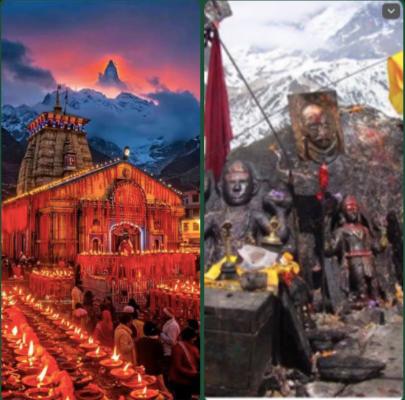
Yes, the Bhairavnath Mandir (also known as the Bhairon Baba Mandir) is deeply and intrinsically connected to the Kedarnath Temple. It is located on a hillock just about 500 meters south of the main Kedarnath shrine and plays a vital role in the religious order of the valley.
The two temples are related through these traditional and spiritual beliefs:
1. The Area's Guardian Deity (Kshetrapal)
Lord Bhairav is a fierce, protective manifestation of Lord Shiva. In the Kedarnath region, he is revered as the Kshetrapal (the guardian or protector of the entire Kedar valley). According to local legend, Lord Shiva appointed Bhairav to guard the land and protect the sacred Jyotirlinga from any negative energies or evil forces.
2. The Winter Sentinel
Every year, around October or November, the doors of the main Kedarnath Temple close for the harsh Himalayan winter due to heavy snowfall. The priests move the symbolic deity down to Ukhimath for worship during these months.
* The Belief: It is deeply believed that while the valley becomes entirely deserted by humans, Bhairav Baba stays behind to guard the main temple complex through the freezing winter. Locals credit his divine vigil for protecting the ancient stone structure from devastating avalanches and natural disasters over the centuries.
3. Ritual Importance and Yatra Completion
Worshipped First: When the Kedarnath Dham opens every spring (usually in May), rituals are first performed at the Bhairavnath Temple before the doors to the main Kedarnath Temple are opened for public darshan.
Mandatory Visit: According to age-old customs, a pilgrimage to Kedarnath is considered incomplete without visiting the Bhairavnath Mandir. Devotees trek up the short but steep hill to thank Bhairav Baba for a safe journey and seek his blessings of courage and protection before heading home.
Aside from its major religious weight, the open-air shrine offers arguably the best panoramic, bird’s-eye view of the entire Kedarnath valley and the surrounding snow-capped peaks.