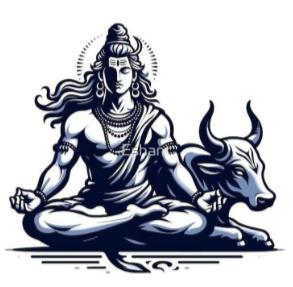
Introduction
To the devotee, he is a refuge. To the cosmos, he is the rhythm of destruction and rebirth. He is known by a thousand names, but three epithets encapsulate his entire existential nature: Mahakaal, Shiv, and Mahadev.
While they all point to the same singular, infinite consciousness, each name unlocks a completely different dimension of his energy. But if we look at the absolute reality of existence, which name suits him best, and why?
1. Mahakaal: The Lord of Time and Dissolution
"Kaal means time, and Kaal means death. He who rules over both is Mahakaal."
As Mahakaal, he is the fierce, uncompromising reality of the universe. Everything that is born must decay and die; time swallows everything. Mahakaal is the personification of this relentless cosmic clock. Wrapped in ashes, sitting in the cremation grounds, he reminds us that physical existence is temporary.
The Energy: Raw, fierce, destructive, and untamed.
Why it fits: It represents the ultimate truth of the physical universe—impermanence.
2. Shiv: The Auspicious and The Silent Void
The word Shiv literally translates to "that which is not." It is the nothingness from which everything originates and into which everything eventually dissolves. Shiv is the absolute silence, the meditative stillness before creation, and the ultimate peace after destruction. Paradoxically, "Shiva" also means auspicious.
The Energy: Meditative, peaceful, dark matter, infinite space.
Why it fits: It represents the ultimate spiritual reality—the unmanifested consciousness.
3. Mahadev: The God of All Gods
Mahadev is the grandest, most encompassing title. It means the "Great God" or the "Supreme Lord." This name bridges the gap between the ascetic sitting on Mount Kailash and the cosmic force ruling the universe. It acknowledges his supremacy over all other deities, demons, and mortals alike. He is Bholenath (the innocent one) who is easily pleased, yet he is the ultimate power.
The Energy: Majestic, compassionate, supreme, and universal.
Why it fits: It is the ultimate expression of reverence, combining his power, his grace, and his absolute supremacy.
The Verdict: What Suits Him Best?
While Mahakaal defines his power over the physical dimension (Time) and Mahadev defines his status in the cosmic hierarchy, SHIV is the ultimate name that suits him best.
Why "Shiv" is the Ultimate Epithet:
It is Beyond Time: Mahakaal is the master of Time (Kaal). But "Shiv" is that which exists even when time itself ceases to exist. He is Kaalतीत (beyond time).
It is Beyond Attributes: Mahadev implies a relationship—he is the greatest among Devas (gods). But "Shiv" requires no comparison. Shiv is the absolute void, the dark energy that holds the stars together.
The Ultimate Paradox: It perfectly balances the dual nature of existence. He is the destroyer, yet he is "The Auspicious One." He is nothingness, yet he is everything.
Conclusion
When you call him Mahadev, you bow to his majesty. When you chant Mahakaal, you acknowledge your own mortality. But when you whisper Shiv, you dissolve into the silent, eternal space that existed before the universe was born, and will remain long after it is gone.
Om Namah Shivaya.