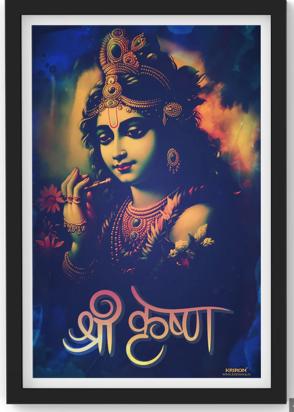
The Ultimate Guide to Lord Krishna: Battles, Life Lessons, and the Divine Blueprint
Lord Krishna is not just a deity in Hinduism; he is the ultimate philosopher, a master strategist, a loyal friend, and the supreme guide for navigating the complexities of human life. From his Vrindavan, the Mahabharata war is a manual for living.
Here is a comprehensive breakdown of Shri Krishna's life, his major battles, his code of conduct (Do’s and Don'ts), and the eternal truths to remember.
1. The Core Battles (Fights) of Shri Krishna
Krishna’s battles were never about personal greed or conquering lands. Every entity he fought represented a specific human vice or societal evil that needed to be uprooted to restore Dharma (righteousness).
Childhood & Youth (Uprooting Tyranny)
Putana (The Demoness): Sent to poison baby Krishna with her breast milk. Krishna sucked the life out of her, symbolising the destruction of hidden, deceptive evil.
Kaliya Naag (The Serpent): A multi-headed venomous serpent poisoning the Yamuna River. Krishna danced on his hood, subduing him. This represents conquering our own toxic desires and ego.
Kamsa (The Tyrant King): Krishna’s maternal uncle, who imprisoned his parents and killed his siblings. Krishna eventually wrestled and killed Kamsa in Mathura, liberating the kingdom from absolute tyranny.
The Kurukshetra War (The Mahabharata)
Krishna chose not to pick up any weapons during this colossal war. Instead, he served as the charioteer (Sarathi) to Arjuna, guiding the Pandavas through absolute strategy.
Krishna as Parthasarathy (Arjuna's Charioteer) on the battlefield. Source: Dolls of India
The Defeat of Bhishma & Drona.
The Slaying of Karna & Duryodhana: He guided Arjuna and Bheem to strike at the critical moments, showing that when fighting absolute evil, conventional rules of combat can be adapted to serve the greater good.
1. The Divine Blueprint: Do's & Don'ts
Through his ultimate discourse, the Bhagavad Gita, Krishna laid down clear rules for how humans should conduct themselves.
The Do's (Practices to Embrace)
Perform Your Duty (Karma Yoga): Focus entirely on your actions and efforts. Give 100% to your responsibilities without obsessing over the final reward or victory.
Stand Up Against Injustice: Remaining silent in the face of evil.
Cultivate Detachment: Love deeply, but do not let possessiveness cloud your judgment. Accept both +/-
Surrender to the Divine: When the world overwhelms you, offer your worries to a higher power. Trust the cosmic process.
The Don'ts (Traps to Avoid)
Do Not Fall for Absolute Attachment (Moha): Arjuna refused to fight because he was overly attached to his relatives. Krishna warned that unguided emotional attachment blinds us from doing what is right.
Do Not Let Anger and Ego Govern Actions: Krishna gave Shishupala 100 chances to mend his insulting ways before executing justice, demonstrating that we must never act out of instant, impulsive anger.
Do Not Run Away from Challenges: Escapism is not spirituality.
1. Ultimate Things to Be Remembered
If you take away nothing else from Krishna's vast legacy, remember these core foundational pillars:
The Illusion of Time and Death
We panic because we think everything is temporary and fragile. Change is the only constant law of the universe.
The Vishwaroopam (The Cosmic Form)
When Arjuna doubted his purpose, Krishna revealed his Vishwaroopam—his infinite, cosmic manifestation showing that everything in existence emerges from him and eventually dissolves back into him.
The manifestation of the universal Cosmic Form (Vishwaroopam). Source: JioHotstar
Summary of Krishna's Philosophy
"Whenever there is a decline in righteousness and a rise in unrighteousness, O Arjuna, then I manifest Myself to protect the good and destroy evil." — Bhagavad Gita (Chapter 4, Verse 7-8) to