To reduce the plagiarism footprint, I’ve rewritten the content to maintain its structure and data while significantly altering the phrasing, vocabulary, and flow.
Into the Blue: A Guide to the Bhrigu Lake Trek
If you are eager to swap the noisy streets of Manali for the quiet crunch of fresh snow and the stillness of the high Himalayas, the Bhrigu Lake Trek is the perfect escape. It is a rare find that whisks you up to an elevation of 14,100 ft in a short window, delivering the kind of rolling alpine scenery usually associated with the Swiss Alps.
Why Choose Bhrigu Lake?
Rapid Rewards: You transition from forest to vast alpine plateaus within just a few hours of starting.
Sacred History: The lake is named after Sage Bhrigu, who supposedly chose this spot for deep meditation. Local folklore suggests the waters never fully solidify into ice because of its divine energy.
Trek Essentials
FeatureDetailsTimeframe3 to 4 DaysPeak Elevation14,100 ft (4,300 m)Challenge LevelBeginner to IntermediateIdeal WindowsMay–June (Snow seekers) or Sept–Oct (Lush greenery)Starting PointGulaba (Short drive from Manali)
The Route: A Daily Breakdown
Day 1: Drive to Gulaba & Hike to Jonker Thatch
The adventure begins with a winding mountain drive from Manali. Once you lace up your boots at Gulaba, you'll climb through dense stands of cedar and oak. After a 3-to-4-hour ascent, the canopy disappears, revealing the expansive grazing lands of Jonker Thatch.
Day 2: Jonker Thatch to Rola Kholi
Expect a shorter but more vertical push today. You will traverse meadows that, in summer, are painted with local wildflowers. As you climb, the Solang Valley disappears below you. Your destination, Rola Kholi, is a scenic base camp tucked into a natural mountain bowl—ideal for night sky photography.
Day 3: The Ascent (Rola Kholi to Bhrigu Lake and back)
The summit day is the most demanding. The terrain turns from grass to jagged rock and, often, a blanket of snow. Though the incline is punishing, the payoff is a 360-degree view of the Seven Sisters, Hanuman Tibba, and Deo Tibba massifs.
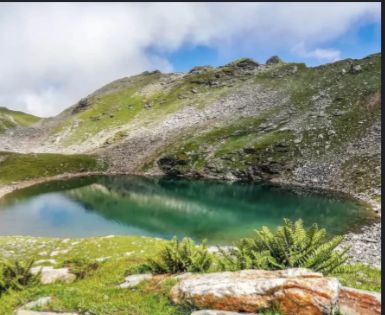
Observation: The water is a chameleon, shifting from a dark sapphire to a vivid emerald depending on the cloud cover and sun.
Day 4: The Return to Vashisht
You have two choices for the descent: retrace your steps or take the steeper path toward the village of Vashisht. Opting for Vashisht allows you to finish your journey by soaking in the local thermal springs—an incredible remedy for aching joints.
Gear Checklist
Master the Layers: Even during the warmest months, summit temperatures can hover near 0°C. Pack high-quality thermals and a warm puffer jacket.
Reliable Traction: Use waterproof trekking boots with aggressive soles; the downhill sections can be treacherous if wet.
Hydration is Vital: Keep at least 2 litres of water on you. High-altitude sickness is a real risk, and staying hydrated is your first line of defence.
A Candid Warning
Labelling a trek "Easy-Moderate" can be deceptive. Because you gain altitude so quickly, the thin air can be a shock to the system. Don't skip your cardio prep. We recommend spending at least 24 hours in Manali to adjust to the elevation before heading to the trailhead.
Ready to discover your own Himalayan sanctuary? Bhrigu Lake is calling. Just remember the golden rule: take only memories and leave only footprints.