The Alpine Eden: Navigating the Valley of Flowers.
Hidden within the craggy peaks of Uttarakhand’s Chamoli district is the Valley of Flowers National Park. This UNESCO World Heritage site encompasses approximately 87 square kilometres of pristine wilderness that resembles a living canvas. As the Himalayan winter recedes each year, the basin evolves into a high-altitude botanical gallery, showcasing over 500 species of indigenous flora.
> Seasonal Guide: Choosing Your Window
The park is accessible from June 1 until early October. The "character" of the valley shifts significantly depending on when you visit:
> June (The Awakening): Best for solitude seekers. You will see the final remnants of glaciers dissolving to make way for hardy early bloomers like Primulas and Anemones.
> July & August (The Peak): The valley is at its most flamboyant. Monsoon showers trigger a massive bloom, blanketing the meadows in the vibrant hues of the elusive Blue Poppy and the revered Brahma Kamal. Note: Prepare for heavy rain and muddy paths.
> September (The Golden Sunset): As the flowering cycle concludes, the landscape transitions into shades of amber and bronze. This month provides the sharpest mountain views and the most reliable trekking weather.
---
The 6-Day Itinerary Strategy
The village of *Ghangaria** acts as your base camp. Most expeditions follow this traditional 6-day circuit:
| Day | Route | Highlights |
| :--- | :--- | :--- |
| 1 | Rishikesh to Govindghat | A scenic mountain drive passing the sacred Prayags (river junctions). |
| 2 | Govindghat to Ghangaria | A 9 km steady climb alongside the roaring Lakshman Ganga. |
| 3 | The Valley Inner Circle | Entry into the floral sanctuary; roughly 7 km of exploration. |
| 4 | Hemkund Sahib | A steep ascent to the world’s most elevated Sikh Gurudwara. |
| 5 | Ghangaria to Govindghat | A descent followed by a drive toward the spiritual hub of Badrinath. |
| 6 | Return to Rishikesh | The concluding drive back down to the foothills. |
---
2026 Entry Requirements & Logistics
The Forest Department maintains rigorous standards to safeguard this delicate ecosystem.
* Permit Acquisition: Entry passes are issued at the Forest Checkpost in Ghangaria, located about 1.5 km from the park’s starting point.
* Entry Fees: A 3-day permit costs ₹150 for Indian citizens and **₹600 for foreigners. Pro tip: Bring a valid student ID for potential discounts.*
* Timing: Gates open at 7:00 AM. No entry is allowed after 2:00 PM, and everyone must exit the park by 5:00 PM.
* Conservation Rules: Overnight stays inside the park are strictly forbidden. Under the "Zero Plastic" mandate, trekkers must bring back every piece of trash they take in.
---
Expert Advice for the Trail
Prioritise a Poncho: Mountain weather is unpredictable. A sturdy, full-coverage poncho outperforms an umbrella, keeping your hands free for trekking poles.
Beat the Crowds: Arriving at the gates by 6:30 AM ensures you capture the best lighting for photography before the clouds roll in.
Footwear Matters: The stone trails turn treacherous when wet. Wear boots with aggressive tread patterns and waterproof lining.
Respect the Quiet: To preserve the "Garden of the Gods" aura, keep noise to a minimum. This protects the local bird species and maintains the serenity for fellow hikers.
> Historical Note: While known to local herders for generations, the valley reached global fame in 1931. British mountaineer Frank Smythe discovered the meadows by chance after descending from Mt. Kamet, later sharing their beauty with the world through his travelogues.
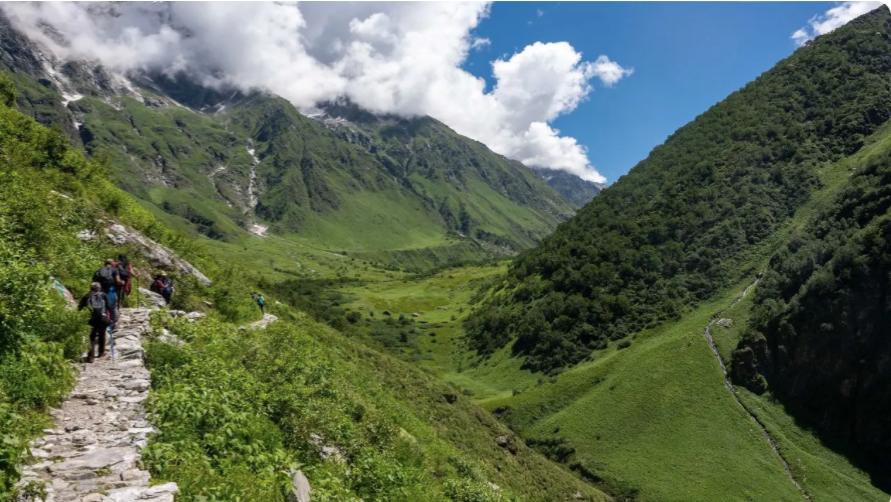
Valley of Flowers Trek- What It Gives and What It Doesn’t
11 May 2026
· AdminHimalayanTravel