Most pilgrims wrap up their spiritual journey at the doors of the Kedarnath temple. They bow their heads, take their blessings, and head back down the valley. But if you look up past the ringing bells of the temple, towards the towering, snow-draped Chaukhamba peaks, there is a hidden trail.
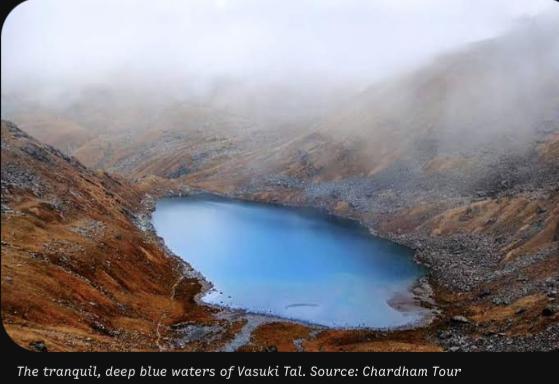
Just 8 kilometres past Kedarnath lies Vasuki Tal, a high-altitude glacial lake resting silently at 14,200 feet (4,328 meters). Shrouded in deep Puranic myths, guarded by unpredictable weather, and blooming with rare Himalayan flora, it is a realm where raw adventure seamlessly merges with quiet mysticism.
The Myth: The Serpent King and the Divine Bath
In the Garhwal Himalayas, every rock has a name, and every stream tells a story. Vasuki Tal is no exception.
The Serpent King’s Resting Place: According to Hindu mythology, the lake is named after Vasuki, the multi-headed King of Serpents who coils around Lord Shiva’s neck. It is believed that the quiet, deep blue waters are where the serpent king resides in absolute meditation.
Char Dham Tour Package - Tickets to Trip
The Ritual of Rakshabandhan: Legends whisper that on the auspicious day of Rakshabandhan, Lord Vishnu descended to earth and took a holy bath in the crystal-clear waters of this lake.
FirstTrek
The Valley of the Gods: Because of its sacred associations, the energy here is distinctly different from the bustling energy of the shrines below. It feels ancient, untouched, and intensely quiet.
Quick Facts: What You Are Stepping Into
Attribute Details: Max Altitude 14,200 feet (4,328 meters)Trek Distance 8 km from Kedarnath Temple (One way)
Difficulty >Level Moderate to Challenging (Steep ridges and glacier moraine)
Best Time to Visit: May to June & September to October.
Key Highlights: Views of Chaukhamba peaks, blooming Brahma Kamal flowers.
Walking the Ridge: The Trekking Experience
Don't let the short 8-kilometre distance fool you. Walking from Kedarnath to Vasuki Tal is a test of your lung capacity and your footing. The air thins rapidly as you push past the tree line into the barren, Arctic-like tundra of the upper Himalayas.
1-
The Initial Ridge Climb
First 3-4 Kilometers
Leaving Kedarnath behind, the trail begins with a steady, punishing incline. You will cross high alpine meadows where, if you are trekking in late summer, you can spot the rare, sacred Brahma Kamal and blue poppies blooming amidst the rocks.
2-
Navigating the Vasuki Top
The Highest Point
The trail narrows significantly as it snakes up to 'Vasuki Top'. From here, the panoramic views of the Chaukhamba peaks are so close it feels like you can reach out and touch them. The wind here is notoriously fierce.
3-
The Steep Descent to the Bowl
Final 900 Meters
Once you reach the top, the lake sits hidden in a massive depression or bowl below. You must carefully navigate a steep, loose-gravel and boulder-strewn 900-meter descent to reach the actual shores of the lake.
4-
The Return Journey
Same-day Backtrack
There are absolutely no staying options or permanent shelters at the lake due to the extreme altitude and unpredictable weather. Spend an hour absorbing the serene aura, and then begin your backtrack to Kedarnath before the afternoon mist rolls in.
Why It Belongs on Your Himalayan Bucket List
Unlike the heavily commercialised trails, Vasuki Tal remains pristine because the mountain demands respect. It gives you the solace that the crowded shrines sometimes cannot. Standing by its shores, watching the clouds dip into the dark blue water while the snow on Mount Vasuki glints in the sun, you realise that the truest temples aren't built of stone—they are carved out of the earth itself.
A Note on Safety: Do not attempt this trek solo or without proper acclimatisation. Ensure you start early in the morning (around 5:00 AM) from Kedarnath so you can comfortably return before the weather turns volatile in the afternoon.